Created, but also correct? – How to validate your sales e-invoices

The correct creation of e-invoices according to the EU standard EN 16931 requires much more than simply completing a digital form. One of the central challenges is to check the created e-invoices for format errors, business rule errors, and content errors as part of an appropriate validation before sending them.
Without complete validation, companies risk their sales invoices being rejected by the customer, resulting in additional efforts due to corrections and delayed payments. Therefore, systematic validation before sending is essential. Only through comprehensive checking for the aforementioned errors, it can be ensured that the invoice is compliant with the standards, legally secure, and can be processed by the recipient’s system. Companies that automate this step and integrate it into their processes avoid additional manual workload.

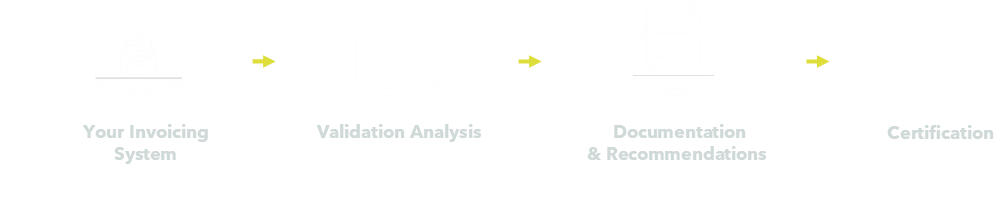
To ensure that your e-invoices fully comply with the requirements of the EU standard EN 16931, we offer you a structured Validation Analysis. This analysis is specifically designed to check the quality and conformity of the invoices created by your system before they are sent to your customers.
Format errors and business rule errors can thus be detected and avoided. If required, we also check whether content errors may occur that go beyond business rule errors. This ensures that your invoices are machine-readable, legally compliant, and complete.
If desired, based on our Validation Analysis, a certification can be issued in accordance with a recognized auditing standard of the German Institute of Public Auditors (IDW).


Security & Compliance: Verifiably standard-compliant validation according to EN 16931

Future-readiness: Early identification of risks

Efficiency: Minimization of incorrect checks and manual effort

Transparency & Quality: Objective evaluation of your validation solution with concrete recommendations for action

Trust: Assurance for all stakeholders